Experiences
The right Seville for your day
Nine ways to read the city, and itineraries built for how long you actually have.
By mood
Choose your hour
Seville is at its best before ten. The monuments are quiet for the first hour, the markets are working rather than performing, and the light on the whitewash is worth the early alarm. Locals eat standing at a counter and are at their desks by nine, so the streets belong to you.
- First entry slot at the Real Alcázar or the Cathedral — 20 quiet minutes
- Mercado de Feria or Mercado de Triana at 9am, when the fishmongers are loudest
- Toast with olive oil and a café con leche at the bar, under 3€
- Plaza de España at 8am: the tiles with nobody standing on them
Between two and five the city retreats indoors and you should too. Lunch is the main meal and it is unhurried: three courses, wine included, and no one asking for the bill. Afterwards, choose a courtyard, a museum or a shaded garden rather than a route.
- Menú del día, 11–14€, served 1:30–3:30pm
- Casa de Pilatos or Palacio de Lebrija — cool patios, few people
- The Jardines del Alcázar or María Luisa in deep shade
- Shops often close 2–5pm; plan errands around it
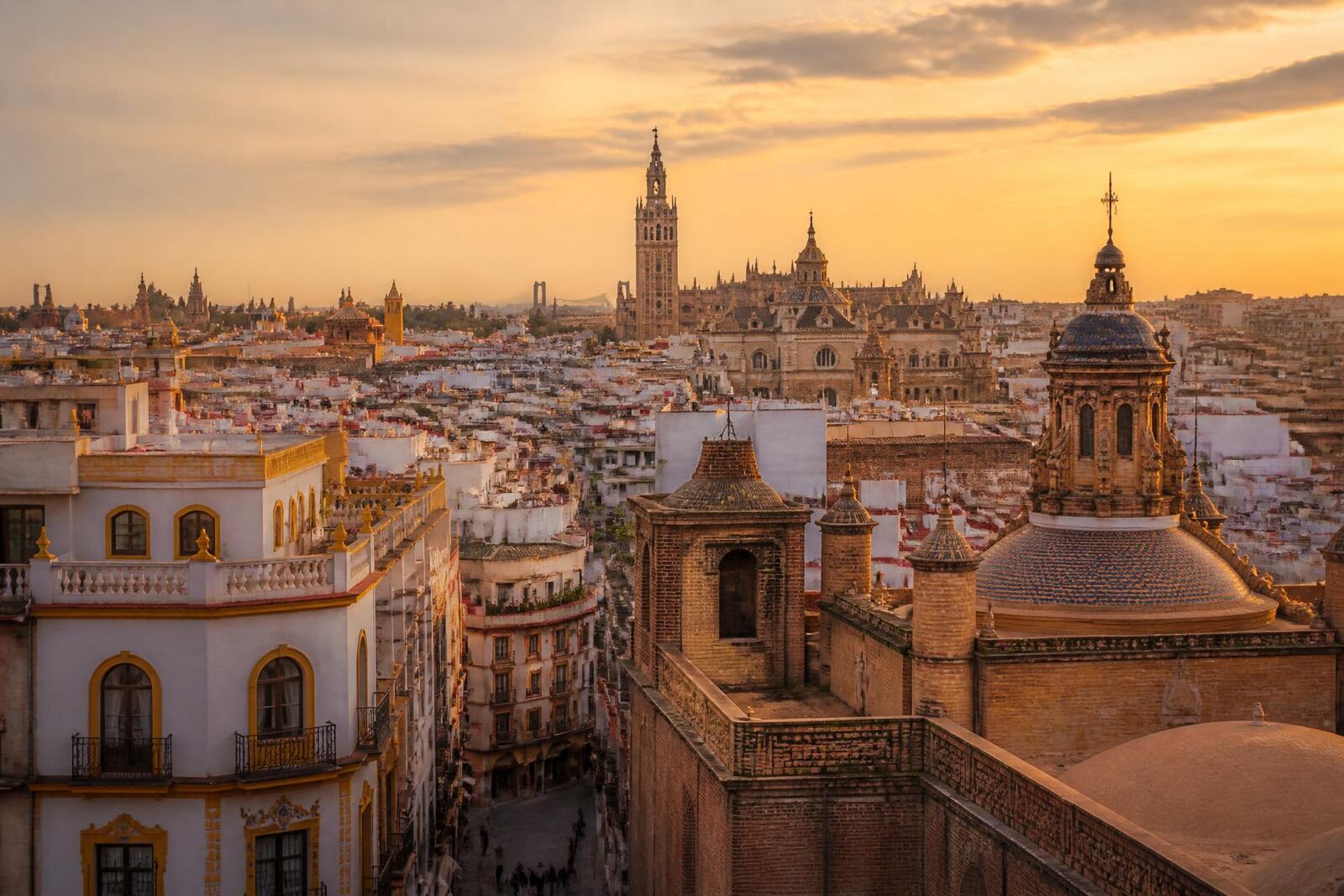
The evening has an order to it: a rooftop for the last light, tapas at two different bars, then flamenco or a cocktail. Dinner rarely starts before nine and clubs do not fill before two, so pace the night backwards from what you most want to see.
- Rooftop drink at 8:30pm, before the tables go
- Two tapas bars, three plates each, standing
- Casa de la Memoria or La Casa del Flamenco — 25 to 100 seats, real singing
- Casa Anselma in Triana after midnight: no sign, no photos
It rains rarely and hard, usually between November and March. The city handles it with covered plans: small museums you can finish, church interiors, market halls and a lunch that lasts three hours. The Alcázar gardens are magic in the rain and nearly empty.
- Museo de Bellas Artes — Zurbarán and Murillo in a former convent
- Setas de Sevilla: the Roman ruins in the basement, under cover
- Mercado de Lonja del Barranco for eating indoors
- Hammam Al Ándalus — the one plan improved by bad weather
July and August regularly pass 40°C. The trick is not endurance, it is scheduling: everything outdoors before noon or after eight, the middle of the day indoors or in water, and a great deal more shade and water than you think you need.
- Sightseeing 8–11:30am, then stop until 7pm
- Open-air cinema and river terraces after 9pm
- Rooftop pools open to non-guests for a day fee
- Carry water; refill at public fountains in María Luisa
From December to February Seville is 16–20°C by day, and it is the version locals like best: half the queues, orange trees full, cocido and puchero on the menu, and the Alcázar with room to breathe. Evenings need a coat; the tiled bars are warm.
- Monuments without queues, even at midday
- Winter dishes: cocido, espinacas con garbanzos, cola de toro
- Christmas belenes and the Alameda markets in December
- Bright, low light — the best month for photographs
Seville is easy with children: flat, walkable, full of open space, and used to families eating late. Alternate one monument with one park or boat, keep a mid-afternoon break, and let dinner be tapas so everybody chooses.
- Rowing boats in the Plaza de España canal, 6€ for half an hour
- The Giralda ramp — no stairs, pushchair-friendly to the top
- Isla Mágica theme park and the river cruise from Torre del Oro
- Acuario de Sevilla and the puppet theatre in María Luisa at weekends
Eating alone here is normal: the bar counter is the best seat in any tapas place, and conversation with the barman is part of the service. The centre is safe and busy late, and one-person plans are cheap and easy to join.
- Order at the counter, two or three tapas, then move to the next bar
- Flamenco venues sell single seats the same day
- Free walking tours and group cooking classes for meeting people
- Alameda for a relaxed night; Santa Cruz for a quiet one
The romance here is unforced: courtyards, rooftops, and a river at dusk. Spend on two things — a good dinner and an evening visit to the Alcázar or a small flamenco room — and leave the rest to walking.
- Evening visits to the Alcázar gardens with live music (spring to autumn)
- Calle Betis at sunset, then dinner in Triana
- A rooftop facing the Giralda, requested when booking
- Horse-drawn carriage or a river boat at golden hour
Itineraries
Save it for my trip
Build a personal itinerary from one to five days, then download it as a designed PDF.